3numbers
Shipping estimates, deposits and final settlement
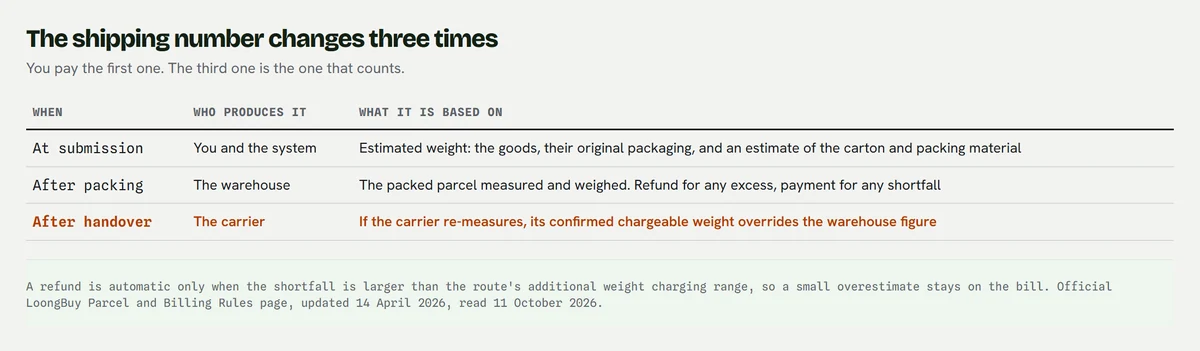
The figure you see when you submit a parcel is a prepayment on an estimate. The warehouse then packs the box and measures what it actually made, and the system settles the difference. After that the carrier may measure it again, and its figure overrides everything.
None of this is unusual, and all of it is printed. What matters is knowing which of the three numbers you are looking at, because people budget against the first and are surprised by the second.
Estimated weight: the goods, their original packaging and an estimate of the carton and packing material.
The packed parcel, measured and weighed. Refund for any excess, payment for any shortfall.
Why the second number comes in higher
The official page names the causes rather than leaving them to be discovered. All five are things you can see coming at the moment you submit.
| Cause | What it means in practice |
|---|---|
| The packed volume was larger than expected | Your estimate used the goods; the warehouse measured the carton around them. |
| Heavier packaging material | Protection you asked for, or protection the warehouse judged necessary, both weigh something. |
| Original packaging was retained | Either because you asked, or because removing it would have risked the goods. |
| The carrier recalculated by volume | A route that bills on volumetric weight converted the box and the converted figure won. |
| The parcel moved into a new charging band | A few grams past an edge are charged as a whole unit, which is why the gap can look disproportionate. |
Four habits that keep the second number boring
None of them is about negotiating. They are about arriving at the measurement with fewer unknowns.
Estimate the carton, not the contents
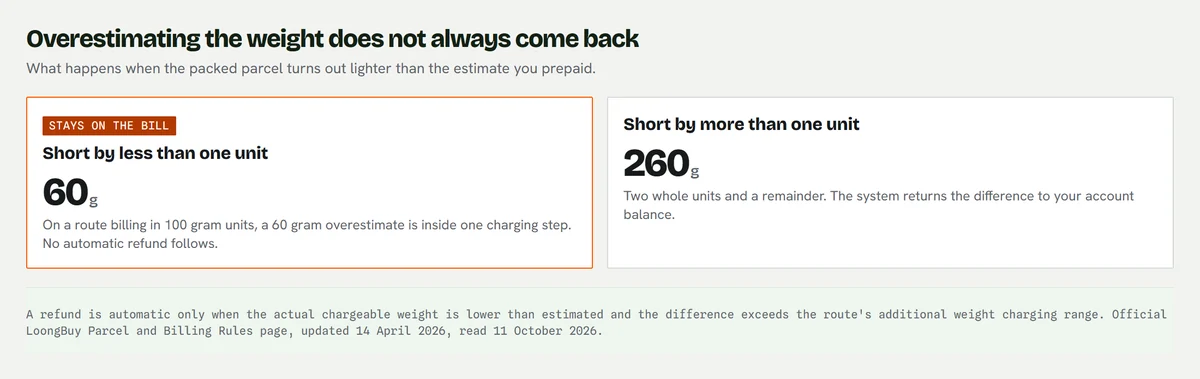
The page says the estimated weight usually includes the goods, their original packaging and an estimate of the outer carton and packing material. Most people estimate only the first of the three.
Rehearse if the parcel is near an edge or full of air
CNY 20 to have the warehouse pack, measure and quote it before you commit, credited against the shipping fee if you then submit that same parcel.
Decide the packing before submission, not after
Removing a shoebox after the quote means a new quote. Any change to the related order after a rehearsal ends the rehearsal and the fee with it.
Know that an unpaid difference stops the parcel
If the actual chargeable weight exceeds the estimate the system requests the difference, and the parcel cannot continue to submission or shipment until it is paid. An automatic deduction authorisation with a limit exists for people who would rather not be the bottleneck.
The currency it settles in is a fourth variable
Every figure above is quoted in yuan on the platform side. What leaves your account is in whatever currency your card or wallet is held in, and the conversion happens inside the payment process rather than at a rate you picked.
The actual charged amount may vary slightly due to exchange rate differences, bank charges, or payment channel fees.
Official LoongBuy Payment and Top Up page, updated 14 April 2026 · read 11 October 2026
| Moving part | When it moves | What to do about it |
|---|---|---|
| The chargeable weight | Between submission and handover | Worth optimising. It is the only one of the four you can act on before you pay. |
| The exchange rate | Between the quote and the moment your bank posts it | Not worth optimising. Worth knowing about so the final figure is not a surprise. |
| A shipping coupon | At parcel submission, one per parcel | Deducts from the international shipping fee only, never from the goods or the domestic leg. |
| Points | At the same moment | Can offset up to ten percent of that same shipping fee, separately from a coupon. |
And a third bill that is not the agent's at all
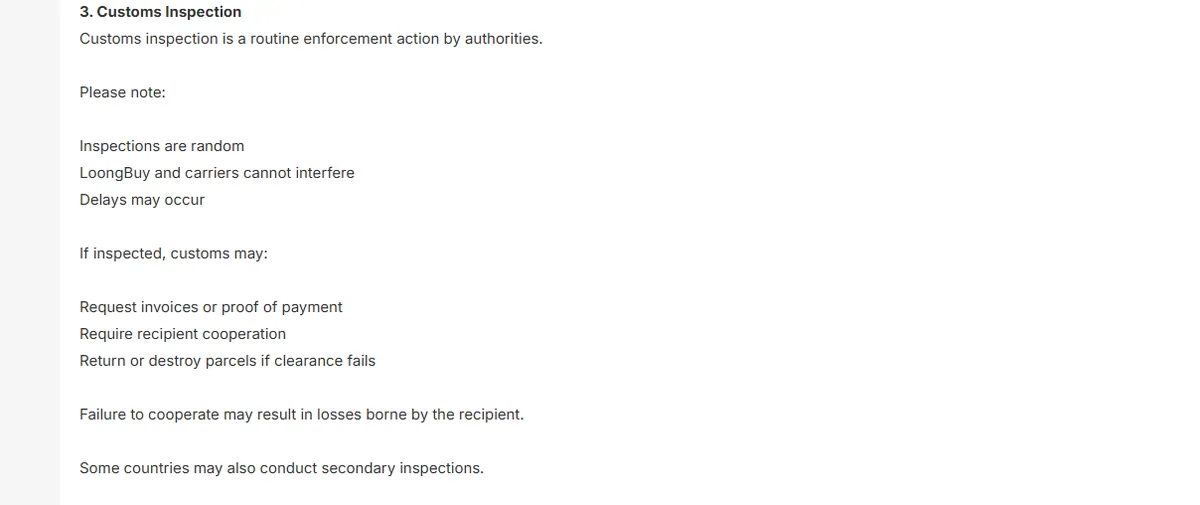
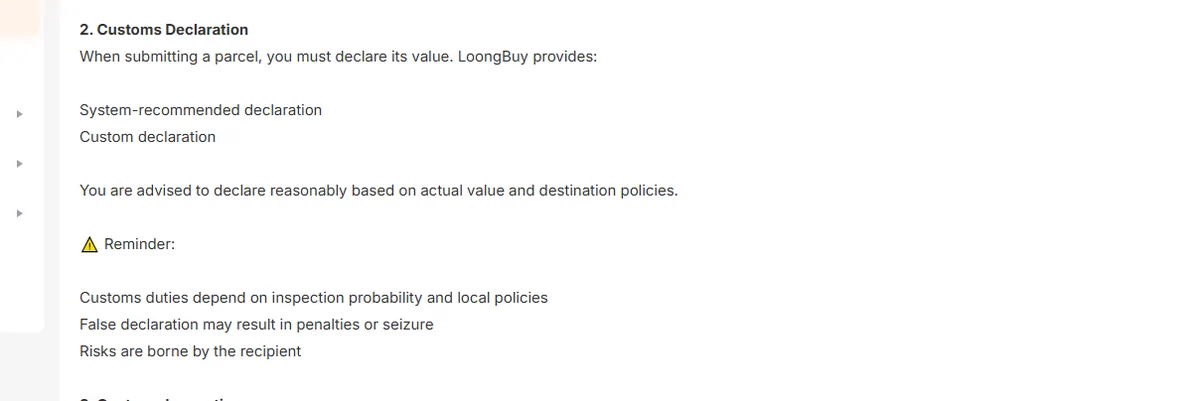
Duty, tax and clearance are charged by the destination and paid by the recipient. The agent does not collect them, cannot predict them and is not answerable for the decision. The only thing within reach is the declaration you make and the weight you present.
What you control
2inputs
The declared value, chosen between a system recommendation and your own figure, and the parcel itself: how heavy it is, how many identical items it holds, which courier carries it.
What you do not
1decision
Inspection is random and routine, carriers cannot interfere, delays may occur, and a parcel that fails clearance may be returned or destroyed.