A catalogue read with a box in mind
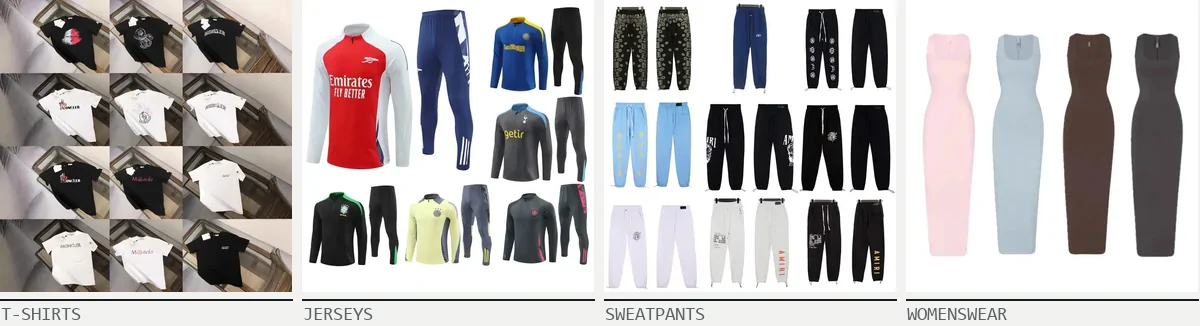
The LoongBuy Spreadsheet is a catalogue of product cards you browse by category. Behind each one sits a single marketplace listing, and the card itself is three things: an image, whatever words the shop typed, and an address. None of it has been through anyone's hands at this end.
So the card can tell you what a thing is and roughly what it costs, and it cannot tell you the two numbers this guide is about: how heavy the thing is and how much room it takes. Those arrive later, from the warehouse. What you can do at the card stage is predict which of the two is going to matter, and that is what the grouping below is for.
A photo, a seller-written title and a marketplace link. Enough to choose; not enough to pack.
The measured weight and the packed dimensions, after inspection. Until then every weight is your estimate.
5groups
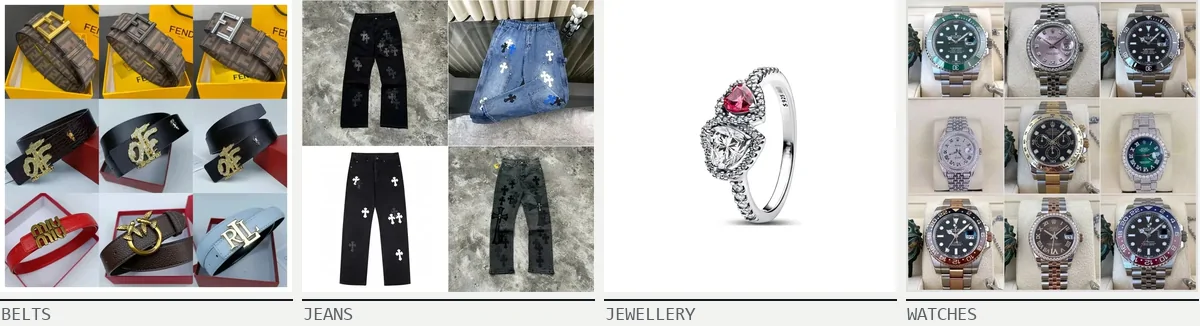
The sixteen categories in five groups, by what they do to a box
The wall appears twice on purpose: once on the way in, and again here, where the navigation lands. What the group headings add is the reason for the grouping, and what the line under each tile adds is the same reason narrowed to one category. All sixteen destinations were loaded by hand before this went up.
Dense 4
Heavy for their size. These set the number on the scale and barely move the volume.
 BeltsCategory page
Check the belt material and buckle weight. Coiling it saves space, but neither its weight nor volume is zero.
 JewelleryCategory page
The lightest thing in the box and the one most likely to arrive in a presentation case larger than itself.
 WatchesCategory page
Steel bracelets are heavy. The watch box is not, but it is rigid, so it holds its volume whatever else you pack around it.
 JeansCategory page
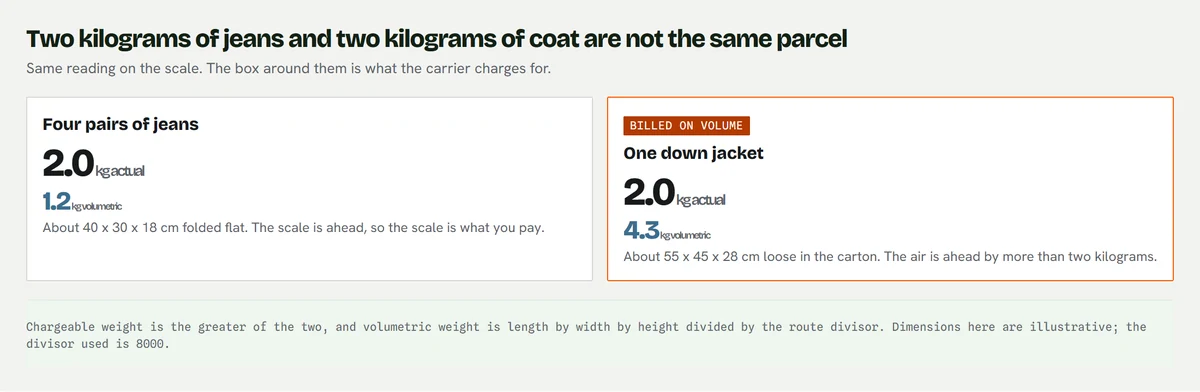
The heaviest ordinary garment per piece. Two pairs can move a parcel into the next band on their own.
Light and bulky 4
Almost weightless and full of air. These are the ones that make volumetric weight win.
 Jackets and coatsCategory page
One puffer can decide the whole parcel. Loose in the box it is volume; vacuum packed it becomes weight again.
 BagsCategory page
A bag is a box full of air, and the warehouse keeps its protective wrapping on. Expect it to set the volumetric figure.
 Caps and hatsCategory page
Caps keep their crown shape in transit, so they take their own space. A soft beanie does not.
 HoodiesCategory page
Light, thick and springy. Three hoodies loose in a carton occupy more than the same three under compression.
Compressible 4
Soft items may compress, but ask whether compression is suitable for the fabric. Packing can change the dimensions of several kinds of goods.
 SweatpantsCategory page
The clearest case for vacuum packing on the official add-on list: they lose most of their volume and keep all of their weight.
 JerseysCategory page
Thin synthetic fabric flattens to almost nothing. A kit counts as two garments but packs like one.
 T-shirtsCategory page
The filler of a haul. Each one is grams, not volume, which is why they are what you add last to reach a band.
 WomenswearSearch results
Long but thin. Folded they are flat; the hanger and the garment bag, if they come, are not.
Boxed 3
The product is fine; the rigid box around it is mostly air, and the box travels too.
 SneakersCategory page
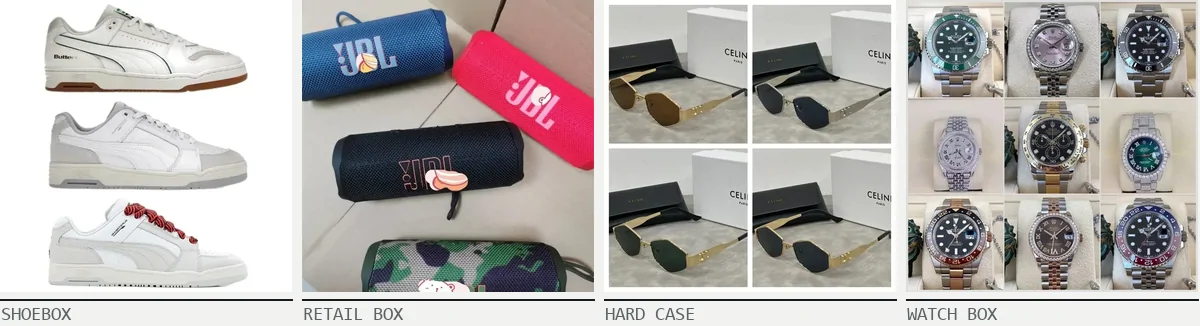
The shoebox is usually the single largest rigid object in a haul. Removing it is on the official add-on list.
 ElectronicsCategory page
Retail packaging is designed for a shelf, not a parcel. A battery inside also narrows which routes will take it.
 EyewearCategory page
Grams of product in a hard case that cannot be crushed. Named on the restricted list, so the route filter sees it first.
Liquid 1
A route question before it is a weight question. The filter runs before the scale does.
 PerfumeCategory page
A liquid, so only certain routes accept it at all. Decide this before you decide anything about weight.
Deciding what to buy next, depending on what the box already holds
A practical reading of the same five groups. The right-hand column is the move that actually changes the bill, not a general tip.
| If the box is already | Add from | Because | Avoid adding |
|---|---|---|---|
| Light but full | Dense | Volumetric weight is ahead, so there is paid-for room doing nothing. Heavy flat things ride in it for free until actual weight catches up. | Anything else bulky |
| Heavy but half empty | Light and bulky | Actual weight is ahead, so the box has space you have already paid for in weight terms. | More dense items |
| Near a band edge | Nothing, or something tiny | The next unit is charged in full the moment you cross it. Check the gap before adding. | A single heavy piece |
| Holding one rigid box | Compressible | Soft goods fill the gaps around a shoebox instead of adding a second rigid shape. | A second boxed item |
| Holding a liquid | Whatever the surviving routes allow | The route filter has already shortened the list; weight is the second question now. | Anything that narrows the routes further |
Turning a product card into something the warehouse can weigh
Four moves, split across two sites: the catalogue decides what, the operator decides when.
Read the title the way the warehouse will
What fits on a card is a trimmed version of what the shop wrote. Open the listing and the untrimmed version is there, which matters because style, colour, labelled size and quantity are the four things checked against it when the goods land.
Take the listing link, not the card
Copy from the marketplace, not from the catalogue. The search box on the operator's site will take a product name or a shop address as well, but only the product link lands on the exact variant you were looking at.
Buy in the order you want the clock to run
Whatever arrives first starts the free storage countdown for the whole build. If one seller is known to be slow, buying that item first costs you nothing and buying it last can cost you the window.
Write down your own estimate before the photos arrive
Guess the grams and the packed size while you still remember what you ordered. When the real figures appear after warehousing, the gap between them and your guess is the most useful thing you will learn all build.
How to spot a finds list that is actually maintained
Three tests, all of them cheap, none of them about how the site looks.
Open three cards from three groups
3clicks
Maintenance is uneven, so sample widely: three categories with nothing in common. A single broken destination settles the question quicker than reading anybody's statement of editorial policy.
Look for a date beside a claim
1date
Not a year in the footer. A date next to the number itself, and a named page it came from. Anything perishable without one is a figure nobody has checked since it was typed.
Third test: find the paragraph that argues against a sale. A weight where the maths turns, a service the operator has not launched yet, a question the writer says they cannot answer. A list with no such paragraph on it is not a guide; it is a shop window with a search field.
The three tests applied to this guide